
Road Emulsion Association full-season data for 2026 shows a sharp rise in encapsulation, while the overall amount of surface dressing fell 4.6% compared to 2025.
The total volume of bitumen emulsion supplied across the UK mainland between January and September 2026, for all product categories, was the highest since the impact of Covid in 2020, according to new figures from the Road Emulsion Association (REA). That makes 2026 a six-year high for emulsion supply.
The full-season data follows the REA’s mid-season update in July, which reported a fall in surface dressing over the first half of the year. During this year’s surface dressing season, April to September, the overall amount of surface dressing was 4.6% below the same period in 2025.
The data shows that encapsulation, which adds an extra treatment to a standard surface dressing, is quickly becoming the priority treatment as it accounted for 35% of all roads surface dressed in 2026, up from 25% in 2025. One in every three roads surface dressed this year was encapsulated.
Possible contributing factors
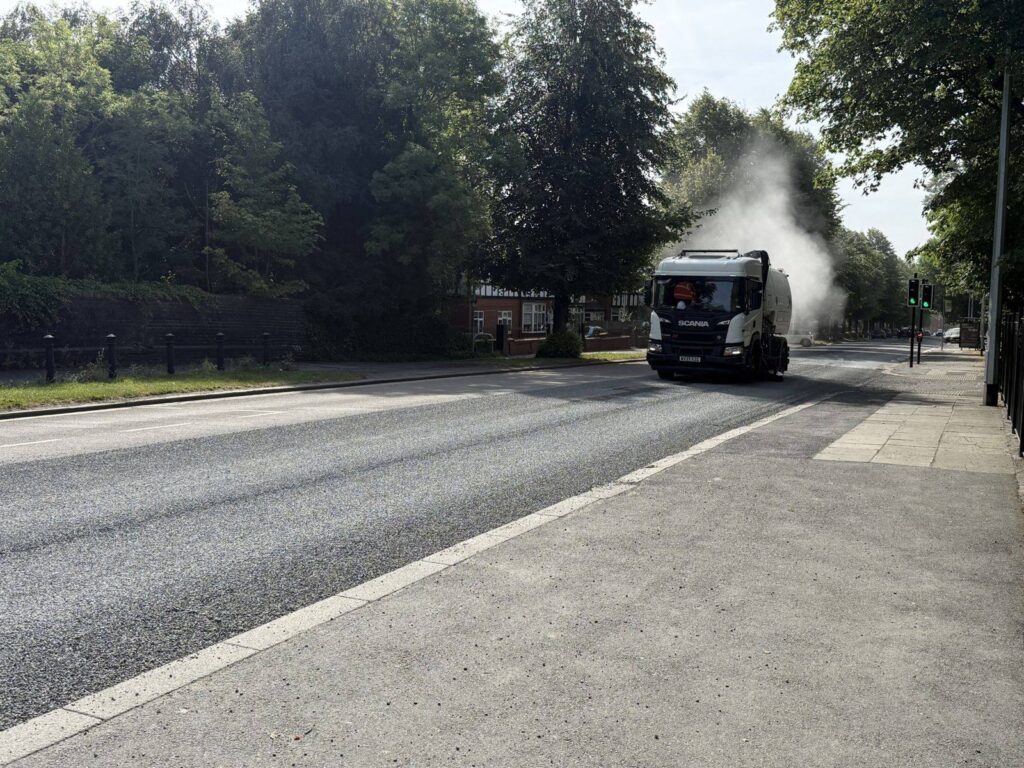
The REA believes the shift towards encapsulation may help explain the lower overall surface dressing figure. Encapsulation costs more per square metre than a standard surface dressing, so the same budget covers a smaller area. Highway authorities may well have spent their budgets efficiently, but on a more expensive, higher-specification process.
High summer temperatures may have affected the completion of some planned programmes and the conflict in the Middle East could have had an impact on the sector.
Surface dressing remains one of the most widely used preventative road maintenance treatments. It seals the road surface against water ingress and restores skid resistance, extending the life of the road beneath.
“Supplying more bitumen emulsion than in any year since 2020 shows things are improving, and the rapid growth of encapsulation shows authorities are choosing more robust treatments for their roads. A lower surface dressing figure does not necessarily mean less was invested. It may simply mean budgets went further in quality rather than in square metres.”
Kevin MawConsultant and Secretary, Road Emulsion Association
“These numbers are very encouraging for drivers. We have long advocated that good preventative maintenance programmes are needed to break the cycle of deterioration plaguing Britain’s local roads. While not quite as many miles of road have been given traditional surface dressing treatment this year, the uptick in the use of encapsulation, which locks in loose chippings, is extremely positive.
“These roads look as good as new at a fraction of the cost of resurfacing and therefore offer great value to local authorities looking to improve their road networks as cost efficiently as possible.”
Simon WilliamsHead of Policy, RAC
“Whilst the figures demonstrate a slight drop in the volume of surface dressing conducted in 2026, the increased, longer term highway maintenance funding to 2029/30, announced by the Department for Transport in December 2025, should see better future planning, and local highway authorities identifying more proactive programmes of preventative treatments, to include that of surface dressing.”
Mike HansfordCEO, Road Surface Treatments Association
Notes to editors
The Road Emulsion Association represents all UK bitumen emulsion manufacturers. Established in 1928, the REA aims to influence policy, share best practice and keep members updated with recent academic research.
Futureproofing our local roads, is our campaign advocating for preventative highways maintenance methods such as surface dressing. You can find out more on the campaign web-page.
For press enquiries, contact Natalie Geraghty of Purple Tree Communications: natalie.geraghty@purpletreecomms.co.uk or 07563247887.